
Loading…
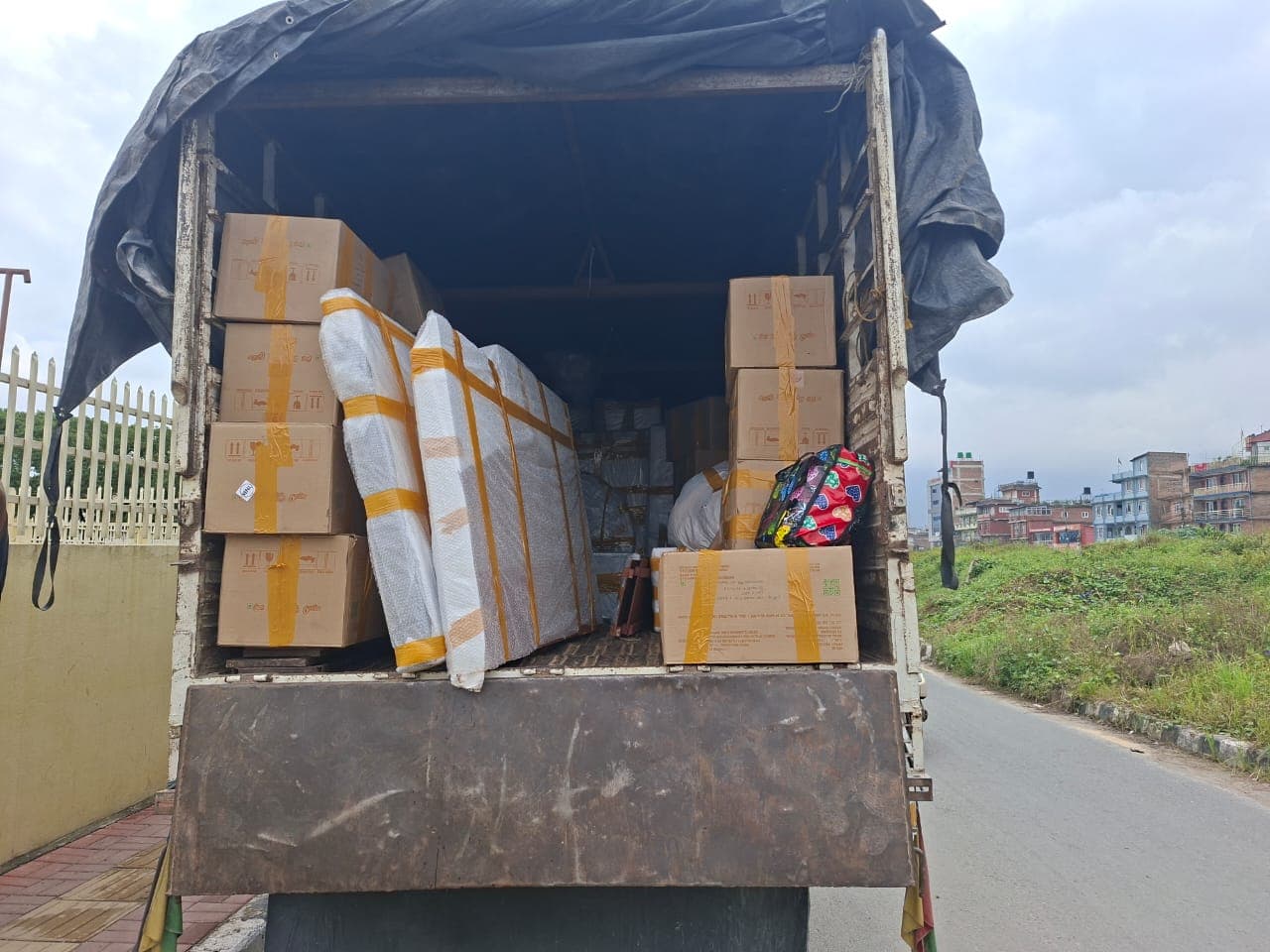
If you've ever stood in a half-packed room in Kathmandu staring at a mattress, a study table, three suitcases, and a rice cooker, wondering whether you actually need "a truck" or just "some truck," you already know the real question behind room shifting. It's never simply "how do I move." It's "what vehicle do I actually need, so I don't overpay for space I don't use, or underbook and end up doing three trips in the rain."
Room shifting is its own category of moving — smaller than a full house shift, but rarely as simple as calling a taxi. A single room in Kathmandu, Lalitpur, or Bhaktapur can hold anything from four boxes and a bicycle to a full bed, wardrobe, study table, gas cylinder, and a two-seater sofa — and the vehicle that comfortably fits one of those loads will be completely wrong for the other. Book too small a vehicle and you're making two or three trips through Ring Road traffic, paying extra each time, and risking damage as items get crammed in.
Book too large a vehicle and you're paying for empty space, struggling to park it in a narrow gully, and possibly running into access restrictions you didn't expect.
This guide breaks down exactly which vehicle fits which kind of room shift — hostel rooms, rented single rooms, studio flats, PG accommodations, shared rooms, and one-room office cabins — based on load size, access conditions, and the road and parking realities specific to the Kathmandu Valley. You'll find a full comparison table, a breakdown of what actually drives your shifting cost up or down, the mistakes people repeatedly make when booking a vehicle, and answers to the 20 questions people ask most before booking.
Room shifting usually means moving the contents of a single room — not a whole house or a multi-room flat. That includes:
Because the load is smaller than a full house move, people often assume "any small vehicle will do." That assumption is where most of the frustration comes from. A room with just clothes and books needs a completely different vehicle than a room with a queen-size bed, a steel almirah, and a washing machine. The right question isn't "what's the cheapest vehicle available" — it's "what's the smallest vehicle that can carry this load safely, in one trip, and can actually reach my building."
It's not just about fitting the load — it's about four things at once:
Before looking at vehicle types, it helps to answer these questions honestly — they determine everything else:
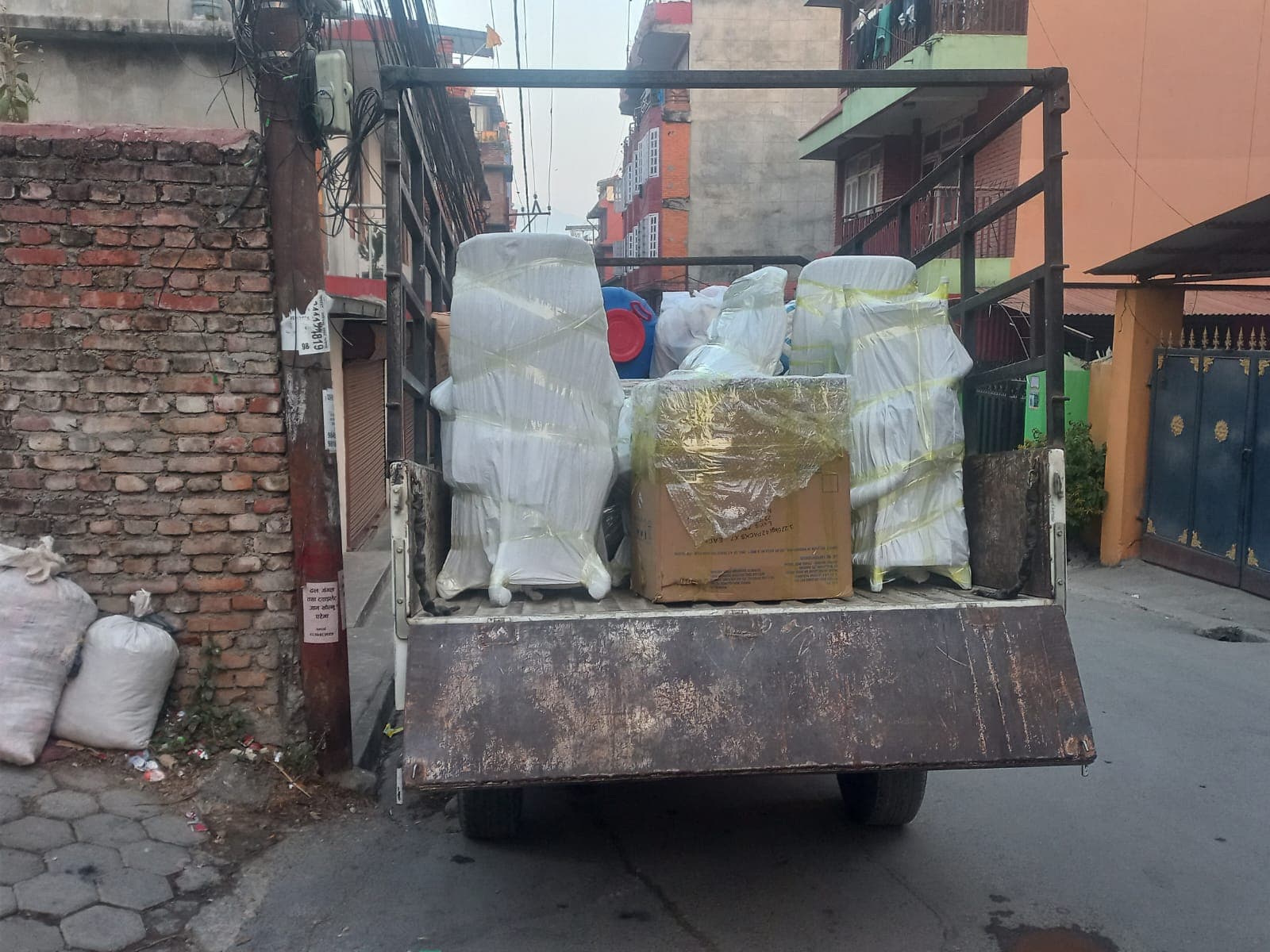
Here's a practical breakdown of the vehicles actually used for room and small-house shifting across Kathmandu, Lalitpur, and Bhaktapur, roughly ordered from smallest to largest.
For a genuinely minimal load — a couple of bags, a backpack, some books, and small personal items — a cargo-friendly two-wheeler or a shared ride with a rack can technically work. This is realistic only for students or single people moving with almost no furniture, and it isn't something most professional movers offer as a dedicated category. It's mentioned here mainly so you don't overbook a truck for a load that's genuinely this small.
This is the most common small commercial vehicle used for light room shifting across Nepal. Mini trucks in this class typically carry a payload in the region of 600–1,000 kg with an open or semi-covered flatbed of roughly 7 feet in length.
Best for:
Why it works well in Kathmandu: Its compact size lets it navigate narrower streets and tighter turns than a full-size truck, which matters a lot in older parts of the city and in dense residential lanes.
The Bolero Pik-Up range is one of the most widely used commercial pickups for goods transport in Nepal. Newer variants sold through Agni Incorporated (Mahindra's authorized distributor in Nepal) offer payload capacities up to roughly 1.7 to 2 tonnes, with a cargo bed around 9–10 feet long, making this a solid step up from a mini truck.
Best for:
This is usually the sweet spot for a "fully furnished single room" — more than a mini truck can comfortably take, but not enough to justify a large truck.
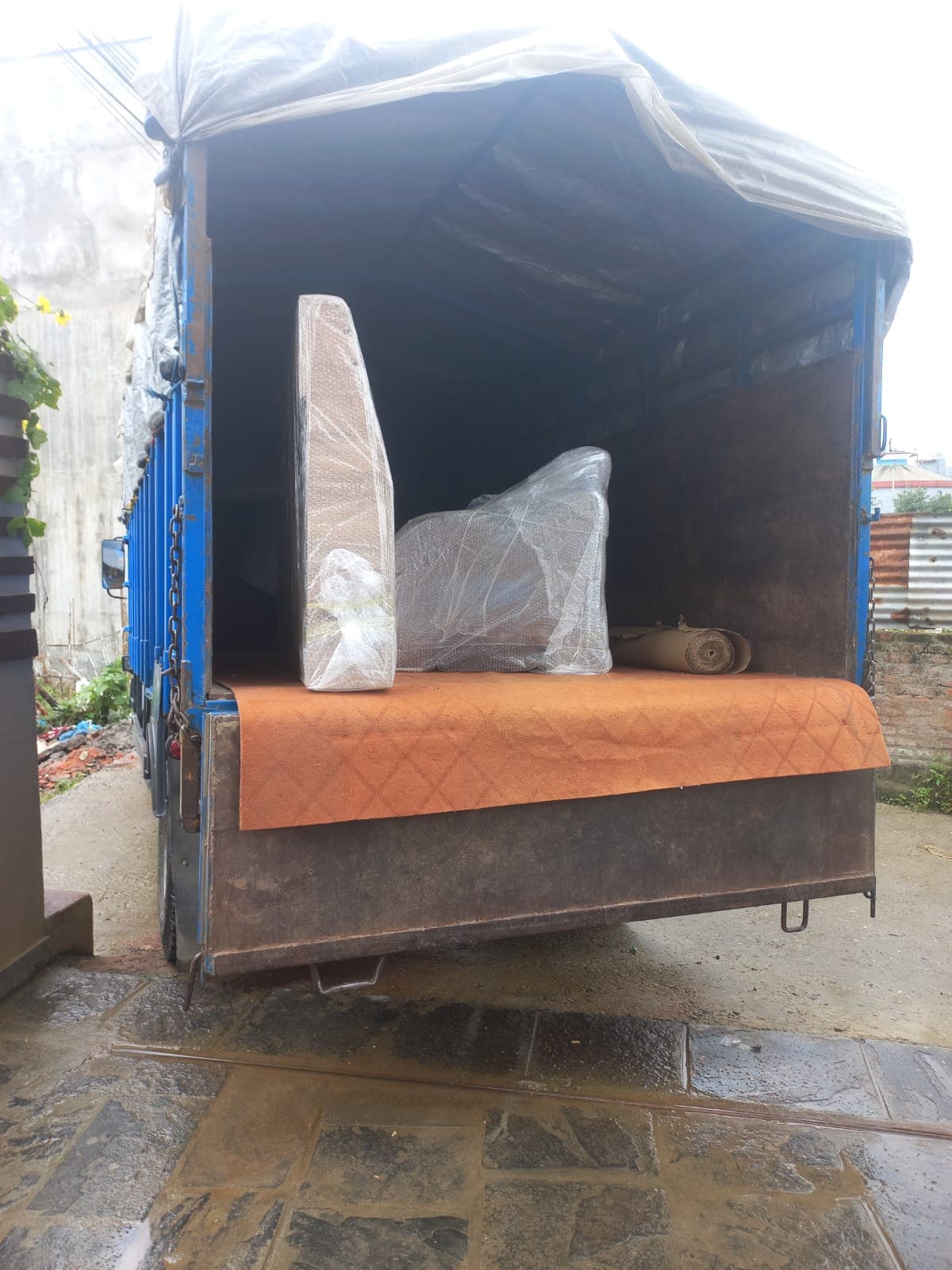
A mid-size truck such as the Tata 407 or similar canter-class vehicle offers a larger, usually covered cargo body, suited to loads that include multiple large furniture pieces plus a significant number of boxes.
Best for:
A note on access: Mid-size trucks need a reasonably wide approach road. If your building is down a narrow gully, confirm with your mover whether the truck can actually reach your gate, or whether goods will need to be hand-carried the last stretch.
Full-size container trucks are generally overkill for a single room and are used mainly for full-house relocations, office relocations, or long-distance intercity moves carrying the entire contents of a multi-room home. If you're moving just one room, you'll almost never need this category — booking one wastes money and can be harder to park near a typical rented room in the city.
In some cases — moving within the same neighborhood with a light load and good road access — a three-wheeler tempo is used as a budget option. It has limited capacity and is more common for short-distance errands than for a full room shift, but it can work for extremely minimal loads over very short distances.
| Vehicle Type | Approx. Payload | Approx. Cargo Bed Length | Best Suited For | Kathmandu Access |
|---|---|---|---|---|
| Two-wheeler/cargo bike | Very light (bags only) | N/A | Students, single-person minimal loads | Excellent — fits anywhere |
| Tata Ace / Mini truck | ~600–1,000 kg | ~7 ft | Single room, hostel/PG, light furniture | Very good — narrow lanes |
| Mahindra Bolero Pik-Up (1.7T–2.0T) | ~1,700–2,000 kg | ~9–10 ft | Fully furnished single room, studio flat | Good — most residential roads |
| Tata 407 / Canter-type truck | Higher than pickup class, covered body | ~10–12 ft+ | Full room + extra furniture, small flat | Moderate — needs wider approach road |
| Large container truck | Full house load capacity | 14 ft+ | Full house, office, long-distance moves | Limited — needs open road access |
| Three-wheeler/tempo | Very light | Small open bed | Very local, minimal-item moves | Excellent — fits anywhere |
Note: Exact payload and dimension figures vary by manufacturer, model year, and individual vehicle — always confirm capacity directly with your mover before booking.
Scenario 1 — Hostel or PG room, no furniture (furniture belongs to the hostel): A mini truck (Tata Ace class) is almost always enough. You're mostly moving boxes, a mattress at most, and personal items.
Scenario 2 — Rented single room with a bed, table, chair, and wardrobe you own: A Bolero Pik-Up (1.7T) is typically the right size — enough capacity for one full room of furniture plus boxes, without paying for unused space.
Scenario 3 — Studio flat with a bed, sofa, TV unit, dining set for two, and kitchen items: Depending on total volume, this sits between a Bolero Pik-Up and a Tata 407-class truck. If in doubt, ask your mover to do a quick on-site or video assessment rather than guessing — this is the single biggest way to avoid booking the wrong size.
Scenario 4 — Shared flat, but you're only moving your one room out of it: Treat this exactly like an independent single-room move — the vehicle size depends on your furniture and boxes only, not the size of the flat itself.
Scenario 5 — Office cabin or single workstation: A mini truck or small pickup is usually sufficient for a desk, chair, a few files, and a small cabinet, unless heavier equipment is involved.
Moving in Kathmandu, Lalitpur, or Bhaktapur isn't the same as moving in a city built on a grid. A few local realities change how you should choose a vehicle:
People often assume price is just "distance times rate," but in practice, several factors combine:
A useful rule of thumb: it's almost always cheaper to book the correctly sized vehicle once than to under-book and pay for a second trip.
Booking a vehicle yourself (through a local transport contact or a ride-hailing-style goods app) works reasonably well when:
Hiring a professional room shifting service is worth the extra cost when:
A professional mover typically also handles the practical side that vehicle rental alone doesn't: furniture moving and shifting (padding, disassembly, safe carrying through narrow stairwells), which matters more than the vehicle itself once you own even one or two large pieces of furniture.
If you want a full pre-move checklist beyond vehicle choice, this step-by-step house shifting checklist covers the broader planning side of the move.
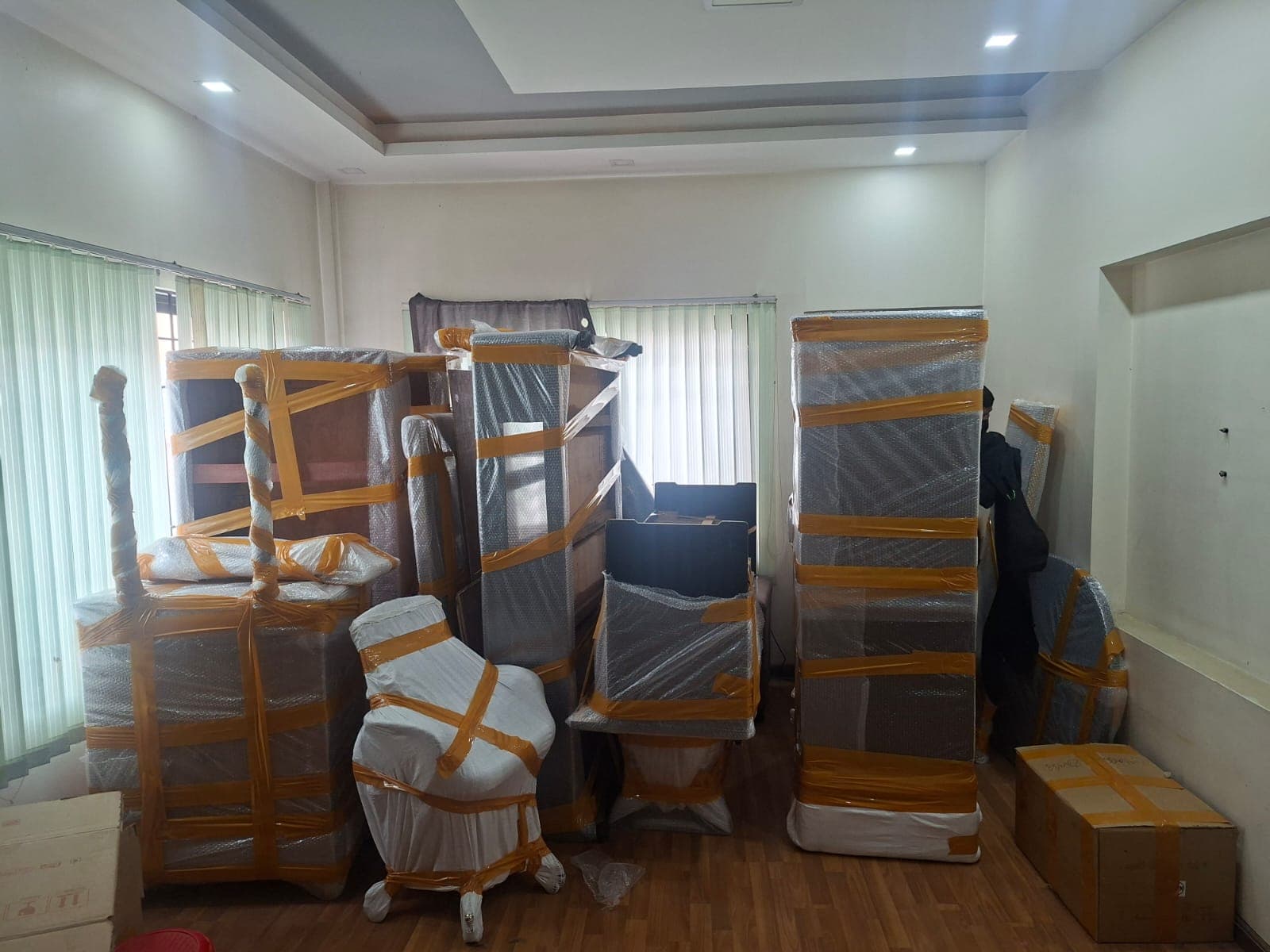
Rather than asking you to guess a vehicle category from a general size chart, an experienced local mover assesses your actual room — furniture count, box volume, floor access, and the width of your building's approach road — before recommending a vehicle. That's the difference between a generic size guide and a shift that goes smoothly on the actual day.
For room shifts specifically, Nepal City Packers and Movers' room shifting service is built around exactly this kind of right-sized approach — matching the vehicle to your load rather than defaulting to whatever's available, and pairing it with trained labor for loading, carrying, and careful handling through narrow stairwells and gullies common across the Kathmandu Valley.
Choosing the right vehicle for room shifting comes down to being honest about three things: how much you actually own, how your building can be accessed, and how much time and money you're willing to trade against each other. A mini truck is enough for a hostel room; a Bolero Pik-Up covers most fully furnished single rooms; a mid-size truck is for rooms with several large furniture pieces or when you're moving more than just one room at once. When in doubt, a quick assessment from an experienced local mover will save you far more than the cost of asking.
1. What is the best vehicle for shifting a single room in Kathmandu?
For most single rooms with a bed, table, wardrobe, and boxes, a Mahindra Bolero Pik-Up (1.7-tonne class) is usually the right size. Lighter loads, such as a hostel or PG room, are often fine with a smaller mini truck like a Tata Ace.
2. Can a mini truck (Tata Ace) carry a full room's furniture?
It depends on the furniture. A mini truck comfortably handles a bed, small table, chairs, and 10–15 boxes, but struggles with a large wardrobe, sofa, and multiple heavy items together — in that case, a Bolero Pik-Up or larger vehicle is safer.
3. How do I know if my room's load needs a bigger vehicle?
Count your large furniture items (bed, wardrobe, table, sofa) and estimate your box count. More than two large furniture pieces plus 15+ boxes usually points toward a Bolero Pik-Up or mid-size truck rather than a mini truck.
4. Is it cheaper to book a smaller vehicle and make two trips?
Usually not. A second trip adds fuel cost, labor time, and often a separate booking charge, which typically costs more than booking one correctly sized vehicle from the start.
5. What vehicle works best for narrow lanes in old parts of Kathmandu, Patan, or Bhaktapur?
Mini trucks and small pickups navigate narrow historic lanes far better than mid-size or large trucks. If your building is in a tight lane, confirm vehicle size with your mover before booking.
6. Do I need a covered vehicle for room shifting?
It's strongly recommended, especially during monsoon season (roughly June to September) or if you're moving electronics, mattresses, or books, since open pickups expose belongings to dust and rain.
7. How much furniture can a Bolero Pik-Up actually carry?
Modern Bolero Pik-Up variants offer payload capacities in the range of roughly 1.7 to 2 tonnes with a 9–10 foot cargo bed, enough for a bed, wardrobe, study table, a couple of chairs, and 15–20 boxes in most cases.
8. What's the difference between a Tata Ace and a Bolero Pik-Up for room shifting?
A Tata Ace is smaller, with a payload generally around 600–1,000 kg and a shorter cargo bed, suited to lighter loads. A Bolero Pik-Up carries significantly more (up to roughly 2 tonnes) and fits a fully furnished single room more comfortably.
9. Do I need a large truck to shift just one room?
Rarely. Large container trucks are meant for full-house or office relocations. A single room, even a well-furnished one, is almost always handled by a mini truck or a Bolero Pik-Up class vehicle.
10. Can I move a fridge or washing machine along with my room's furniture in a pickup?
Yes, in most cases a Bolero Pik-Up can accommodate a room's furniture plus one mid-size appliance, as long as it's loaded and secured properly. For multiple large appliances alongside full furniture, a mid-size truck is safer.
11. How does floor level affect vehicle choice?
Floor level doesn't change the vehicle category itself, but it does affect loading time — higher floors without a lift take longer to carry items down, which should be factored into your booking window and discussed with your mover in advance.
12. What should I check about a moving vehicle before booking?
Confirm the cargo bed length and payload, whether it's open or covered, whether the mover provides loading labor, and whether the vehicle can physically access your building's approach road.
13. Is a three-wheeler tempo suitable for room shifting?
Only for very light loads over very short distances — a few bags or boxes within the same neighborhood. It's not designed for furniture-heavy room shifts.
14. How far in advance should I book a vehicle for room shifting?
Booking a few days ahead is safer, especially around month-end, before festivals like Dashain and Tihar, or during peak moving seasons, when vehicle availability tends to tighten.
15. Does the vehicle type affect the overall shifting cost?
Yes — vehicle category is one of the main cost factors, along with distance, labor for loading/unloading, floor access, and timing (peak season versus off-season).
16. Should I hire a professional mover or just rent a vehicle myself?
If your load is small and you have help for loading/unloading, self-booking a vehicle can work. If you have furniture that needs disassembly, fragile items, or you're unsure of vehicle size, a professional room shifting service is generally worth it.
17. Can one vehicle handle both my room's shifting and a few office items?
It depends on total volume. If the combined load exceeds what a Bolero Pik-Up comfortably carries, a mid-size truck is a safer choice to avoid a second trip.
18. What happens if the booked vehicle can't fit down my lane?
This is why confirming your building's approach road width in advance matters — if a larger vehicle can't reach your gate, items may need to be hand-carried the final stretch or transferred to a smaller vehicle, adding time and cost.
19. Who can help me figure out the exact vehicle size I need?
An experienced local moving company can assess your room's furniture, box count, and access conditions and recommend the right vehicle size directly, rather than leaving you to guess from a general chart.

Nepal City Packers and Movers
Share:
Explore Our Range of Moving & Logistics Services

Experience fast and reliable domestic and international courier services with Nepal City Packers and Movers. Secure delivery for all your packages, locally and globally!

Explore additional services by Nepal City Packers and Movers, including loading, unloading, parking assistance, and more. Tailored solutions for all your needs!

Explore reliable two-wheeler transport services by Nepal City Packers and Movers. Safe, secure, and timely bike transportation locally or across Nepal. Contact us today!
 Nepal City Packers and Movers - Banepa, Kavre
 Top Packers and Movers - Bouddha, Kathmandu
 Professional Packers and Movers - Balaju, Kathmandu
 Reliable and Affordable Packers and Movers - Baluwatar, Kathmandu
 Top-Rated Packers and Movers - Maharajgunj, Kathmandu
 Leading Packing and Moving Service | Nepal City Packers and Movers - Durbarmarga, Kathmandu
 Nepal city packers and movers - Lalitpur, Nepal
 Nepal City Packers and Movers - Thimi, Bhaktapur
 Reliable Packers and Movers - Kupandole, Lalitpur
 Affordable and Reliable Packers and Movers - kalanki, Kathmandu