
Loading…

A corporate relocation is a different order of complexity from a small office move. It's not a handful of workstations and a weekend — it's multiple departments, significant IT and server infrastructure, dozens or hundreds of employees, client relationships that can't be disrupted, and often a multi-week or multi-phase execution plan rather than a single moving day. Getting it right requires genuine project-management discipline, not just a bigger truck.
This guide covers what corporate move services actually involve in Nepal, how larger organizations should plan and execute a relocation, what genuinely affects cost and timeline at this scale, and how Nepal City Packers and Movers supports corporate clients through this kind of relocation across Kathmandu Valley and beyond.
Scale is the obvious difference, but it's the kind of complexity that really separates corporate relocation from a smaller office shift:
| Factor | Standard Office Move | Corporate Move |
|---|---|---|
| Typical scale | A handful to a few dozen staff | Dozens to hundreds of staff |
| Departments involved | Often a single team | Multiple departments with distinct needs |
| IT complexity | Standard workstations, maybe a small server | Substantial server/network infrastructure |
| Planning timeline | 2-4 weeks | 6-12+ weeks |
| Execution approach | Often single-day | Frequently phased across days or weeks |
| Stakeholder coordination | Facilities/office manager | Cross-departmental project team |
Given the added complexity, corporate moves genuinely need a longer planning runway than a standard office relocation.
This is one of the most important strategic decisions in corporate relocation planning, and it deserves genuine consideration rather than defaulting to either approach.
A single-event move — relocating the entire organization over one coordinated period, typically a weekend — works best when the organization can genuinely tolerate a defined period of reduced or paused operations, and when the total volume and complexity can realistically be handled within that window.
A phased, department-by-department move — relocating one team or function at a time over days or weeks — works better when full-organization downtime isn't acceptable, when departments have significantly different equipment or timeline needs, or when the new space itself is being prepared incrementally rather than being fully ready all at once.
| Approach | Best Suited For | Trade-off |
|---|---|---|
| Single-event move | Organizations that can tolerate a defined pause; simpler coordination | Higher risk if anything goes wrong, since everything happens at once |
| Phased move | Organizations needing continuous operations; large or complex moves | Takes longer overall; requires managing a split operation temporarily |
Whichever approach fits, the decision should be made early — ideally in the first planning phase — since it shapes nearly every other decision that follows, from IT sequencing to employee communication.
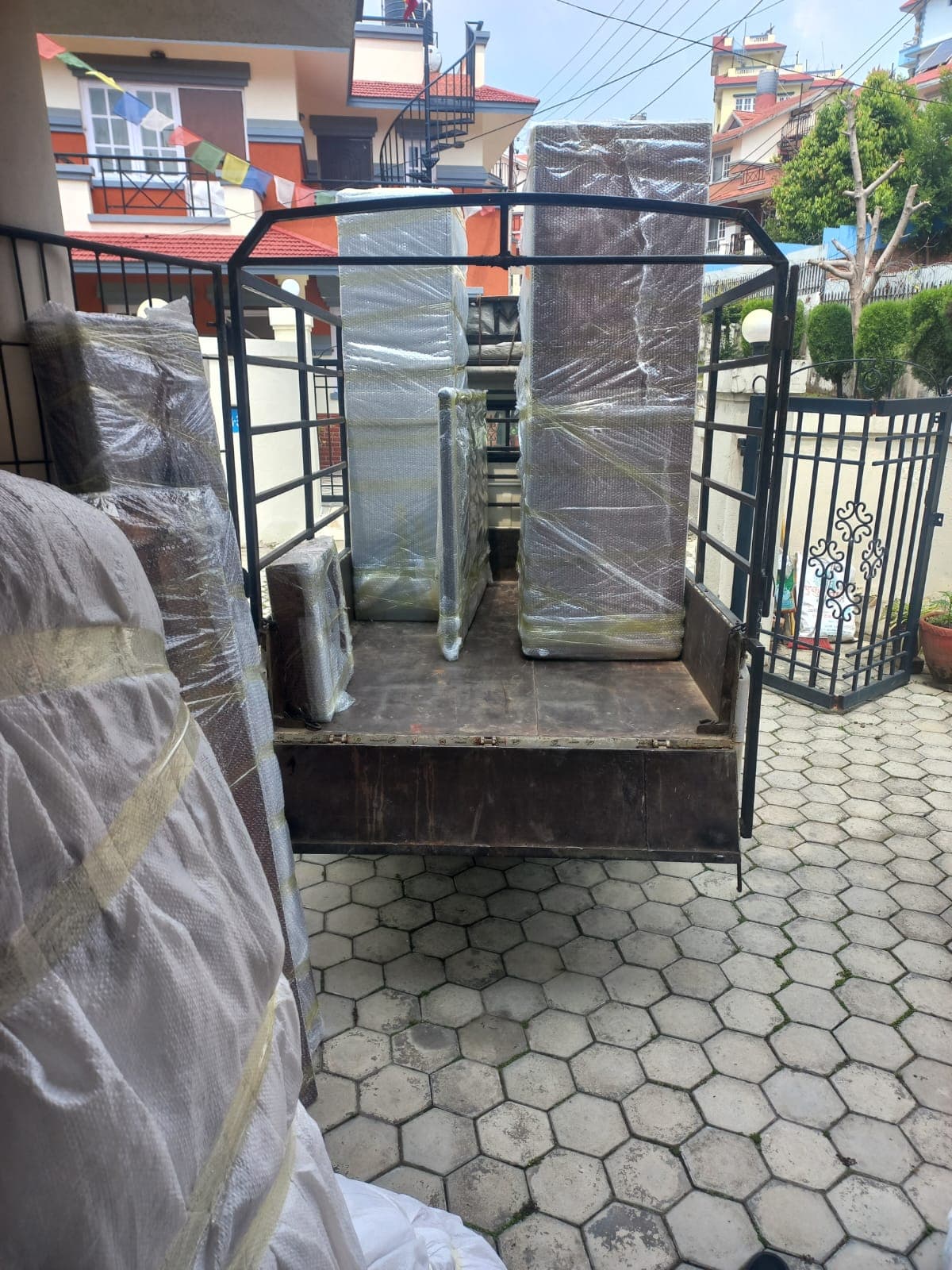
This deserves particular emphasis at corporate scale, since the stakes and complexity are considerably higher than for a small office.
Comprehensive data backup across all systems, not just critical servers — corporate-scale IT infrastructure often includes distributed systems across departments, and a genuinely thorough backup plan accounts for all of them, not just the most obvious central systems.
Network and server infrastructure planned and tested at the new site well before the bulk of staff and furniture arrive — for a corporate-scale move, this often means IT teams working at the new location days or even weeks ahead of the general move, to ensure connectivity, internal systems, and any specialized software dependencies are fully operational and tested before general operations resume.
Anti-static, carefully labeled handling for all sensitive equipment — the same principles covered in general office-shifting guidance apply here, but at greater volume and often greater equipment value, making careful handling and clear documentation (cable photographs, equipment inventories) even more important.
A dedicated IT continuity plan for any phased move, since a department-by-department approach means some systems need to function across two locations simultaneously during the transition period — this requires deliberate planning around network access, shared systems, and data synchronization between sites.
Vendor coordination for internet and specialized services at the new location, started with real lead time given that corporate-scale connectivity and specialized service needs may require more complex installation than a standard small-office setup.
Communicating a corporate relocation effectively requires more structure than a smaller office's informal announcement.
A formal communication plan with clear phases — initial announcement, department-specific timelines, and moving-day instructions — rather than a single blanket message, since different departments and levels of the organization need different information at different points.
Department-level points of contact, particularly important for a phased move, so each team has someone coordinating their specific portion of the transition and answering team-specific questions.
Leadership visibility and communication, since a corporate relocation is a significant organizational event that benefits from clear messaging from leadership about the reasons for the move, the timeline, and what it means for the organization going forward — not just facilities-level logistics.
Client and external stakeholder communication planned as its own workstream, particularly for organizations with substantial client-facing operations, where address changes, potential service disruptions, and any temporary operational adjustments need proactive, clear communication well ahead of the move.
Corporate relocations involve a genuinely larger set of administrative and legal considerations than a smaller office move:
Commercial lease obligations at both the current and new location, including notice periods, any move-out condition requirements, and coordination of key dates to avoid unnecessary rent overlap or gaps.
Business registration and licensing updates, which for larger organizations may involve more complex registration structures than a small business, requiring more careful coordination with relevant government offices.
Insurance policy updates, covering both the physical relocation itself (equipment and goods insurance during transit) and the updated coverage details for the new location.
Vendor and supplier contract updates, particularly for organizations with numerous ongoing vendor relationships — internet and telecom providers, security services, cleaning and facilities services, and any specialized equipment maintenance contracts.
Financial institution and banking updates, given the scale of financial relationships larger organizations typically maintain, including any address-dependent documentation or registered details.
| Administrative Area | Corporate-Scale Consideration |
|---|---|
| Lease obligations | Often more complex terms; coordinate key dates carefully |
| Business registration | May involve more complex structures than a small business |
| Insurance | Coverage for transit and updated location details |
| Vendor contracts | Numerous relationships to update systematically |
| Banking/financial | Address-dependent documentation across multiple accounts/services |
At corporate scale, physical logistics planning benefits from the same rigor applied to IT and administrative planning:
A detailed floor plan for the new space, ideally developed collaboratively with department heads so furniture and equipment placement reflects actual team needs and workflows, not just a generic layout.
Equipment inventory across all departments, both for insurance/liability purposes during the move and to confirm everything arrives and is accounted for at the new site — genuinely important at a scale where a missing item is much harder to trace back to a specific stage of a complex, multi-day move.
Specialized equipment handling plans for anything beyond standard office furniture and computers — this might include specialized machinery for certain industries, laboratory or technical equipment, or substantial document archives requiring careful, organized transport.
Disposal and donation planning for furniture and equipment not moving to the new location, which at corporate scale often involves a genuinely larger volume than a small office would generate, sometimes warranting its own dedicated logistics plan.
Access point measurement at both locations for any oversized items, particularly relevant for larger equipment or furniture that a corporate-scale office might have beyond standard workstations.
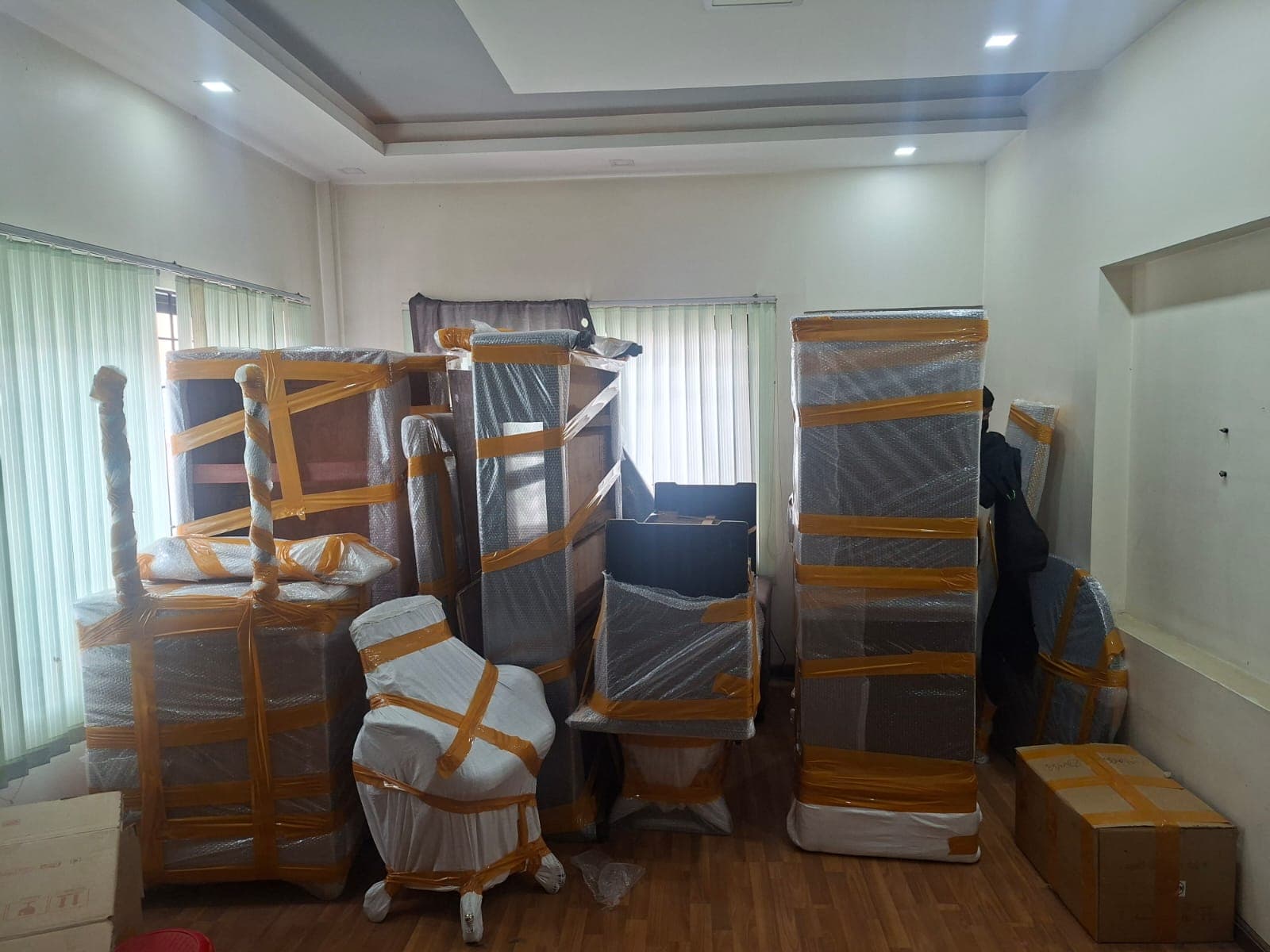
Given the scale and stakes involved, vetting a moving provider for a corporate relocation deserves particular rigor:
Confirm genuine experience with corporate-scale moves specifically, not just general office relocations — the project-management discipline, IT handling volume, and multi-department coordination required are meaningfully different from a smaller office job.
Ask about their capacity for phased moves, if that's your organization's approach — not every provider is equally equipped to manage a multi-week, department-by-department relocation with the coordination it requires.
Confirm their approach to IT and server infrastructure specifically at scale — anti-static handling, cable labeling, and careful sequencing matter even more when the volume and value of equipment involved is considerably higher than a small office.
Ask for references or case studies from similarly scaled corporate clients, since a provider's general reputation doesn't necessarily indicate genuine corporate-scale capability.
Get a comprehensive, detailed quote based on a thorough site survey, given how much corporate-scale complexity can vary — a rough estimate is even less reliable at this scale than for a smaller office.
Confirm their damage and liability policy specifically for high-value corporate equipment, given the considerably higher value typically involved compared to a small office's standard furniture and computers.
Ask about their project management approach — does the provider assign a dedicated point of contact for a corporate-scale job, and how do they coordinate with your internal project team throughout the process?
Nepal City Packers and Movers approaches corporate relocations with this level of planning discipline — a comprehensive site survey, coordination with your internal project team, anti-static and careful handling for IT infrastructure at scale, and flexibility across single-event or phased execution approaches depending on what your organization's operational needs actually require.
Corporate move pricing scales with complexity in ways that go beyond simple volume:
| Factor | Why It Matters at Corporate Scale |
|---|---|
| Total volume across all departments | The primary baseline driver, but at a considerably larger scale than a small office |
| IT/server infrastructure volume and value | Specialized handling requirements scale with both quantity and equipment sensitivity |
| Single-event vs. phased execution | Phased moves typically involve more total labor and coordination time, though they reduce operational risk |
| Number of locations/departments | More departments with distinct needs add planning and execution complexity |
| Floor/lift access at both locations | Same principle as smaller moves, but compounded by considerably higher volume |
| Specialized equipment | Machinery, technical, or laboratory equipment requiring dedicated handling adds cost |
| Timeline compression | A tighter timeline for a large-scale move typically requires more resources deployed simultaneously, adding cost |
| Project management/coordination | Corporate-scale moves benefit from dedicated coordination that a smaller move might not require |
Given this complexity, an accurate corporate moving quote requires a genuinely comprehensive assessment — not a rough per-workstation estimate — and should account for the full scope of departments, equipment, and execution approach involved.
At corporate scale, the hidden cost of downtime — already significant for a small office — becomes proportionally larger and more consequential. Extended downtime across a larger organization means lost productivity multiplied across many more employees, potential client-facing service disruption with real business relationship implications, and in some cases, contractual or revenue consequences tied to service continuity commitments.
This is exactly why the planning rigor covered throughout this guide — comprehensive IT sequencing, genuine phased-move consideration where appropriate, and dedicated project coordination — is generally cost-effective even when it adds to the direct moving budget, since it reduces the much larger and harder-to-quantify cost of extended organizational disruption.
For a mid-to-large corporate relocation choosing a phased approach, execution might unfold like this: IT infrastructure is set up and tested at the new location in the weeks before any general move begins, ensuring connectivity and core systems are ready. Non-client-facing departments (back-office functions, for instance) move first, in a controlled sequence that allows the project team to identify and resolve any issues before higher-stakes departments relocate.
Client-facing teams and any operationally critical functions move later in the sequence, once the process has been validated through the earlier phases, minimizing the risk of disruption to the organization's most sensitive operations. Throughout, a dedicated project coordinator (or team) tracks progress against the plan, addresses issues as they arise, and maintains communication with both internal stakeholders and the moving provider.
Full settling-in — every department fully operational, all administrative loose ends closed out — typically takes noticeably longer than the physical moves themselves, often extending several weeks beyond the last department's relocation.
A high-level checklist reflecting the corporate-scale considerations covered throughout this guide:
What's the difference between a standard office move and a corporate move?
Scale and complexity — corporate moves typically involve multiple departments, significant IT and server infrastructure, dozens to hundreds of employees, and often require phased execution and formal business continuity planning, compared to the simpler scope of a small office relocation.
How far in advance should a corporate relocation be planned?
Generally 8-12 weeks or more, considerably longer than the 2-4 weeks typical for a standard office move, given the added complexity of multi-department coordination, extensive IT planning, and administrative requirements at scale.
Should a corporate move be done all at once or in phases?
This depends on your organization's tolerance for operational downtime. A single-event move works well when a defined pause is acceptable; a phased, department-by-department approach is better suited to organizations that need continuous operations throughout the transition.
How is IT infrastructure handled differently in a corporate move compared to a small office move?
At corporate scale, IT planning typically involves more extensive server and network infrastructure, often requiring dedicated setup and testing at the new location well before general staff and furniture arrival, and more comprehensive backup and continuity planning across distributed systems.
Who should be involved in planning a corporate relocation?
Ideally a cross-departmental project team rather than a single coordinator — including facilities, IT, HR, and department heads — given the scale of coordination required across a larger organization.
How much does a corporate move cost in Nepal?
This varies enormously based on total volume, IT infrastructure complexity, number of departments, and whether a single-event or phased approach is used. A comprehensive site survey and detailed quote are essential given how much corporate-scale complexity varies between organizations.
What happens to client-facing operations during a corporate relocation?
This should be planned explicitly rather than left to chance — proactive client communication, and often positioning client-facing teams later in a phased move sequence once the process has been validated with less operationally sensitive departments first.
How long does it take for a company to be fully operational after a corporate move?
Often longer than the physical relocation itself — full settling-in, including every department fully operational and all administrative details closed out, can extend several weeks beyond the last phase of a corporate-scale move.
Does a corporate move need a dedicated project coordinator from the moving company?
For anything beyond a small office, yes — a corporate-scale relocation benefits significantly from a dedicated point of contact on the moving provider's side who coordinates directly with your internal project team throughout the process.
How is specialized equipment (machinery, technical, laboratory equipment) handled in a corporate move? This requires a dedicated handling plan distinct from standard office furniture and computers, and it's important to confirm a provider's specific experience with your type of specialized equipment before booking.
What administrative tasks are unique to corporate-scale relocations?
Commercial lease coordination, more complex business registration considerations, insurance updates for both transit and the new location, and systematic updates across numerous vendor and financial relationships — all typically more involved than for a smaller business.
How should employee communication be handled for a large-scale corporate move?
Through a formal, phased communication plan rather than a single announcement — covering initial notice, department-specific timelines, and moving-day instructions, ideally supported by department-level points of contact, especially for a phased execution approach.
Can Nepal City Packers and Movers handle multi-department, phased corporate relocations?
Yes — Nepal City Packers and Movers supports both single-event and phased corporate relocations, coordinating with internal project teams, applying anti-static and careful handling for IT infrastructure at scale, and adapting the execution approach to match an organization's actual operational continuity needs.
What's the biggest risk in a poorly planned corporate move?
Extended, costly downtime — at corporate scale, lost productivity is multiplied across a much larger workforce, and for client-facing organizations, service disruption can carry real business relationship and revenue consequences well beyond the direct cost of the move itself.
How is cost different between a phased and single-event corporate move?
Phased moves typically involve more total labor and coordination time spread across a longer period, though they reduce the operational risk of an all-at-once transition — the right choice depends on weighing this trade-off against your organization's genuine tolerance for downtime, not on direct cost alone.
A corporate move succeeds or struggles based on the planning discipline behind it — genuine phased-vs-single-event strategy, IT infrastructure sequenced and tested before staff arrival, and coordination across every department and stakeholder involved.
Nepal City Packers and Movers works with organizations at this scale, bringing the same careful handling used across its full range of services to the added complexity corporate relocation genuinely requires — from the first site survey through the last department settled into its new space.

Nepal City Packers and Movers
Share:
Explore Our Range of Moving & Logistics Services

Experience fast and reliable domestic and international courier services with Nepal City Packers and Movers. Secure delivery for all your packages, locally and globally!

Explore additional services by Nepal City Packers and Movers, including loading, unloading, parking assistance, and more. Tailored solutions for all your needs!

Explore reliable two-wheeler transport services by Nepal City Packers and Movers. Safe, secure, and timely bike transportation locally or across Nepal. Contact us today!
 Nepal City Packers and Movers - Banepa, Kavre
 Top Packers and Movers - Bouddha, Kathmandu
 Professional Packers and Movers - Balaju, Kathmandu
 Reliable and Affordable Packers and Movers - Baluwatar, Kathmandu
 Top-Rated Packers and Movers - Maharajgunj, Kathmandu
 Leading Packing and Moving Service | Nepal City Packers and Movers - Durbarmarga, Kathmandu
 Nepal city packers and movers - Lalitpur, Nepal
 Nepal City Packers and Movers - Thimi, Bhaktapur
 Reliable Packers and Movers - Kupandole, Lalitpur
 Affordable and Reliable Packers and Movers - kalanki, Kathmandu